
Unlinked Brand Mentions: The Backlinks You Already Earned
Learn what unlinked brand mentions are, why reporters leave the link out, how to find them for free, and how to ask for the backlink…

How do you turn a spreadsheet of government numbers into national news coverage? With a newsworthy, data-driven industry study, built the same way every time. Each one is projected to earn 5 to 20 media placements, and our campaigns average about 20 backlinks (clickable links from a news story to your website, which lift your Google ranking): 20.1 per campaign, at an average DA of 76.9.
In this guide I walk you through exactly how we build an industry study at Prism PR, an award-winning, full-service PR agency that is also a digital PR and linkbuilding firm. I will use one we just published as the worked example: PR Pros Now Outnumber Reporters More Than 7 to 1, our own 2026 analysis of federal job data.
I have run Prism for eight years, and I have seen this work help a client get acquired: Seniorly’s industry studies earned 317 stories with editorial backlinks in 2025 and played a key role in its acquisition by CareScout, a subsidiary of Genworth Financial. Here is the process, step by step.
An industry study starts with news, not with data. Before we open a single file, we ask what reporters are already writing about and what question nobody has answered with numbers yet.
For our worked example, the trend was hard to miss. Newsrooms keep shrinking. Northwestern University’s Medill School found that 170 newspapers closed or merged in the past year and 238 U.S. counties are now news deserts, with no locally based source of professional news. At the same time, PR specialist jobs are at their highest BLS estimate going back to 1997. That tension is the story every communications reporter wants: who is left to read all those pitches?
A good trend for an industry study has three things:
We write several concepts, check each one against what has already been published, and pick the one with the strongest news value.
Reporters trust public data they can check. So most of our industry studies start with federal sources: the Bureau of Labor Statistics, the Census Bureau, the FBI, the FTC, and the Social Security Administration, depending on the topic. When a client has its own data, we add it. That is often what makes the industry study impossible to copy.
For PR Pros vs. Reporters, we used the BLS Occupational Employment and Wage Statistics for May 2025, which counts PR specialists and news reporters in every state, plus Census population estimates to measure reporters per resident. For Social Catfish, we analyzed FBI, FTC and Social Catfish platform data to rank all 50 states on losses, victims per capita and scam types.
A few rules we follow here:
The client’s own data gets the same verification as federal data before a single number goes into the draft.
Here is the part that turns one national story into 50 local ones. We rank every state, and Washington, D.C., on the measure that matters. Every state ranking is a local headline for a local reporter.
In our worked example, the national finding was the lead: there are now 7.2 PR specialists for every news reporter in the U.S., the widest gap in BLS job data going back to 1997. Then the ranking gave every state its own story. Minnesota came out on top with 16.2 PR specialists per reporter. South Dakota was the only state near parity, at 1.1 to 1. New Jersey had the fewest reporters per resident.
That is the formula for an industry study:
We use statistical scoring where it fits, so a ranking that combines several measures weighs each one fairly. Then we look for the surprise. Readers expect the obvious states to lead. The finding that makes an editor stop scrolling is usually the one nobody predicted.
This is the step most agencies skip, and it is the one that protects your brand. A single wrong number in a national story follows you for years.
At Prism, every industry study goes through our Editor-in-Chief fact check before anyone outside the company sees it. Every claim gets checked against its original source, line by line, and gets a verdict: confirmed, needs an update, imprecise, misleading, unverified, or false. Anything that is not confirmed gets fixed or cut. Records and firsts get extra scrutiny: if we say “the widest gap going back to 1997,” we check every year back to 1997.
Then the numbers get rebuilt independently from the raw data, with no access to our spreadsheet, to make sure the math holds. If the two answers do not match, the industry study does not ship.
We built much of this checking into Prism’s own AI tools for PR, which we also use for media monitoring and newsjacking. AI makes the checking faster. It does not replace the person who signs off.
Why go this far? Because reporters notice. Cision’s 2026 State of the Media survey of 1,899 journalists found they value original research and credible data in pitches. Credible is the key word.
Our content team pairs PR executives with veteran national journalists. That matters, because a reporter reads an industry study differently than a marketer does. They want the news in the first sentence, the source of every number, and the limits of the data stated plainly.
So we write it like news:
We also add a section of practical advice, so the industry study is useful to readers and not only to reporters. Then the client approves every word before anything is published.
The industry study lives on the client’s own website. That is the point: every backlink a reporter adds points to the client’s site, not to ours.
After the client approves it, we publish it on the client’s blog with:
This is also where search comes in. A published industry study is a page reporters can link to, cite and come back to the next time they cover the topic. Muck Rack’s May 2026 analysis of more than 25 million links cited by ChatGPT, Claude and Gemini found that about 84% come from earned media, which Muck Rack defines broadly to include journalism, research, government and encyclopedic sites, so the coverage an industry study earns also feeds the AI answers your buyers read. Read more in our guide to how to get mentioned by ChatGPT.
Now the outreach starts. We pitch three groups at once:
For Seniorly, that meant custom pitches to national reporters, targeted outreach to media in every state and D.C., and health care and senior living trade publications. Every pitch is short and tailored. In Cision’s survey, 72% of journalists said fewer than a quarter of the pitches they get are relevant, so we write to the reporter’s beat, not to a list. Here is how we pitch a journalist.
The goal is a backlink in every story. Every pitch links to the industry study on the client’s site, and we track every story that runs and check whether it links. When a story mentions the client without a link, we ask the outlet to add it. That is backlink reclamation, and it is part of every full-service campaign.
Here is what the process has produced for our clients:
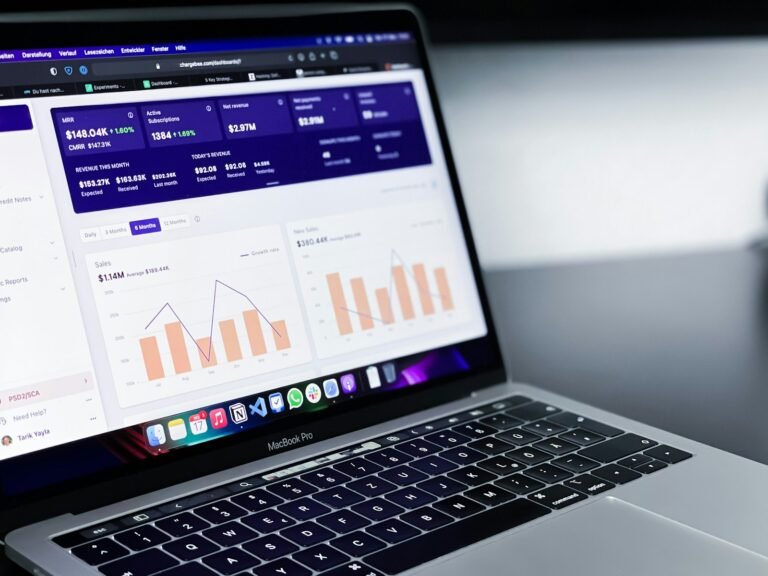
Here’s a live dashboard for our client CareScout showing what we’ve secured over the last 9 months, which was a full-service campaign, including these monthly studies.
Company-wide, Prism has placed more than 25,000 stories and earned more than 20,000 editorial backlinks. You can see more in our case studies and on our SEO, AEO and linkbuilding page, which covers how earned media helps you show up when people search on Google and when they ask AI tools like ChatGPT, Claude and Gemini.
An industry study is original research, usually built from federal data and sometimes a company’s own data, that answers a newsworthy question and ranks every state. Reporters cover it because it gives them news, a national finding and a local angle they could not get anywhere else.
It depends on the data and the topic. The steps that take time are the analysis and the fact check, because every number has to be verified before the industry study goes to the client for approval. Rushing those steps is how mistakes reach reporters.
At Prism, newsworthy, data-driven industry studies start at $1,999 as the first step of our pay-for-performance pilot. Backlinks are billed only for outlets with a Domain Rating of 50 or higher. No backlinks, no invoice.
Because every state ranking is a local story. A national finding might interest a few national reporters. A ranking of all 50 states and D.C. gives local newsrooms in every market a reason to cover it, and every story is another chance at a backlink.
Yes. The steps in this guide are the steps we follow. The hard parts are the verification, the writing for reporters, and the time it takes to pitch national, trade and local media in every state.
That is the whole process: find the trend, pull the data, rank every state, verify every claim, write it for reporters, publish it with graphics and a newsroom map, and pitch it until the backlinks come in.
But if you don’t want to deal with all this, let us do it for you. Start with a pay-for-performance industry study, or contact us and tell me what your company knows that the news does not.
Keep Reading
Learn what unlinked brand mentions are, why reporters leave the link out, how to find them for free, and how to ask for the backlink…
Dofollow links can pass ranking credit, nofollow links usually do not. See how to check any link, why paid posts fail, and how real news…
What is link building? A plain-English guide to how backlinks work, why Google counts them, what link building costs, and which tactics Google calls link…
Get Started
Tell us what you want to be known for. We will show you how earned media gets you there.