
Measuring Reputation: How Public Company Auditors Assess Link Profile Risk
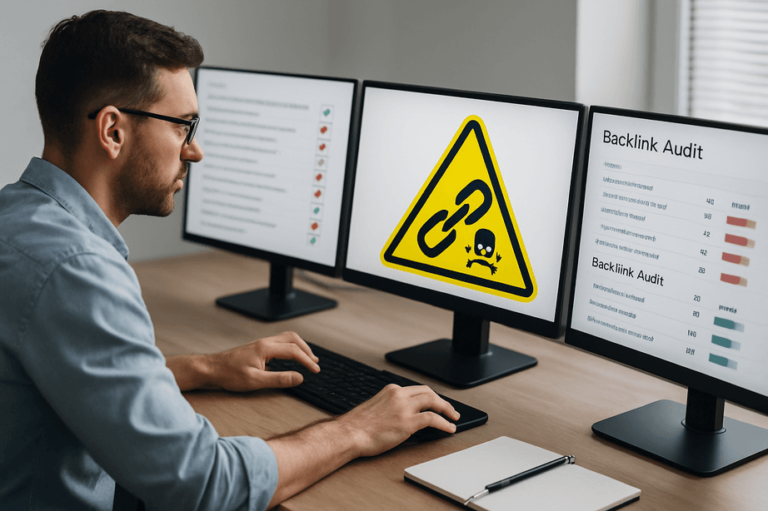
Measuring reputation involves understanding how public company auditors assess link profile risk and its impact on brand credibility.

When it comes to building lasting search visibility, editorial backlinks are the gold standard. These links are earned through genuine media coverage—created because your content, data, or story was truly newsworthy. Unlike guest posts, paid placements, or directories, editorial backlinks signal real authority and trust to both users and search engines.
John Mueller, Search Advocate at Google, recently reaffirmed this distinction: “If the links are primarily there because you paid for them, or because you exchanged something for them, then those aren’t considered natural links and can be ignored or penalized by our algorithms” (Google Search Central, 2024). Editorial links are now treated as core trust signals by Google, especially after recent spam updates (Search Engine Land, 2024). Creating newsworthy content—such as original research, industry reports, or infographics—is essential for attracting true editorial attention, according to both SEMrush and Backlinko 2024 studies.
For organizations still relying on outdated tactics, the risks are growing: Google’s 2024 spam updates and new Site Reputation Abuse Policy now aggressively penalize manipulative or purchased links. To see how editorial links work in practice, visit our SEO link building service page.
Those who continue to use risky, traditional link building strategies face not only potential penalties but also wasted resources. For a breakdown of what to avoid, explore our overview of the risks of traditional link building.
Delivering pay-for-performance link building isn’t just a marketing promise—it’s a rigorously defined process. Here’s how digital PR executed by seasoned PR professionals turns newsworthy stories into lasting SEO gains:
Integration with reputation strategy and content marketing is now standard for top-performing digital PR campaigns, maximizing reach and brand equity. Brands that secure even a handful of editorial placements on DA 70+ sites can experience up to a 27% boost in organic traffic within 90 days (SEMrush, 2024).
Consider how editorial PR drives results in the broader market. In a 2024 industry case, a SaaS company shifted from traditional link building to a PR-first approach, focusing on original research and targeted media outreach. The outcome: over fifty backlinks from major media, a 40% surge in organic traffic within three months, and first-page rankings for competitive keywords (GlobalWavePR, 2024).
An e-commerce brand launching an eco-friendly product line ranked in the top three for competitive keywords after a PR campaign focused on sustainability, securing coverage in 15 niche blogs and increasing referral traffic by 60% (GlobalWavePR, 2024).
Supporting this, industry-wide data shows that editorial links retain their value far longer than traditional tactics. A recent survey found that while up to 30% of links from guest posts or directories decay within a year, editorial placements on reputable outlets maintain their authority and SEO impact (Authority Hacker, 2024).
To see more examples of editorial PR in action, visit our client successes.
For marketing leaders, the choice between digital PR and traditional link building is more than tactical—it’s strategic. Here’s how the two approaches compare:
| Traditional Link Building | PR-First/Editorial Link Building | |
|---|---|---|
| Process | Guest posts, directories, paid placements | Original stories, media outreach, earned links |
| Link Quality | Low–medium DA, often manipulative | High DA, natural, editorial |
| Longevity | High rate of link decay | Long-lasting, trusted placements |
| Risk | High risk of Google penalties | Google-favored, low penalty risk |
| Cost | Lower up front, higher if penalized | Invests more, delivers proven ROI |
A 2024 Authority Hacker survey found that 93.8% of agencies now prioritize link quality over quantity, up from 76% in 2022. Meanwhile, penalty rates for non-editorial link tactics spiked after Google’s December 2024 update, with 41% of surveyed SEOs reporting manual actions or lost rankings (Authority Hacker, 2024).
Cutting corners on link quality can now trigger Google penalties and wipe out organic wins, hurting everything from SEO to public trust and even share price.
For a practical exploration of these differences, read our Digital PR vs. Standard Link Building deep dive.
Too many brands still measure success by sheer link count, failing to recognize the superior value of editorial, evergreen placements.
Key takeaway: Focus on building a reputation with editorial links, not just accumulating backlinks.
Making this shift enables you to future-proof your brand’s authority and search visibility—even amid constant algorithm changes. As Google’s link policy continues to change, future-proofing your SEO means focusing on trust, transparency, and truly earned media. In a 2024 industry survey, 78% of marketing leaders reported higher ROI and lower risk when prioritizing pay-for-performance link building and editorial PR approaches (Moz, 2024).
Ready to see what digital PR link building can do for your brand? Contact us today for a tailored strategy session.
Keep Reading
Measuring reputation involves understanding how public company auditors assess link profile risk and its impact on brand credibility.
Navigating reviews and lists requires understanding whether inclusion links from “Best Of” pages are still safe for your SEO strategy.
Toxic link detox is essential for SEO success—learn how to identify and disavow legacy backlinks before they harm your rankings and visibility.
Get Started
Tell us what you want to be known for. We will show you how earned media gets you there.